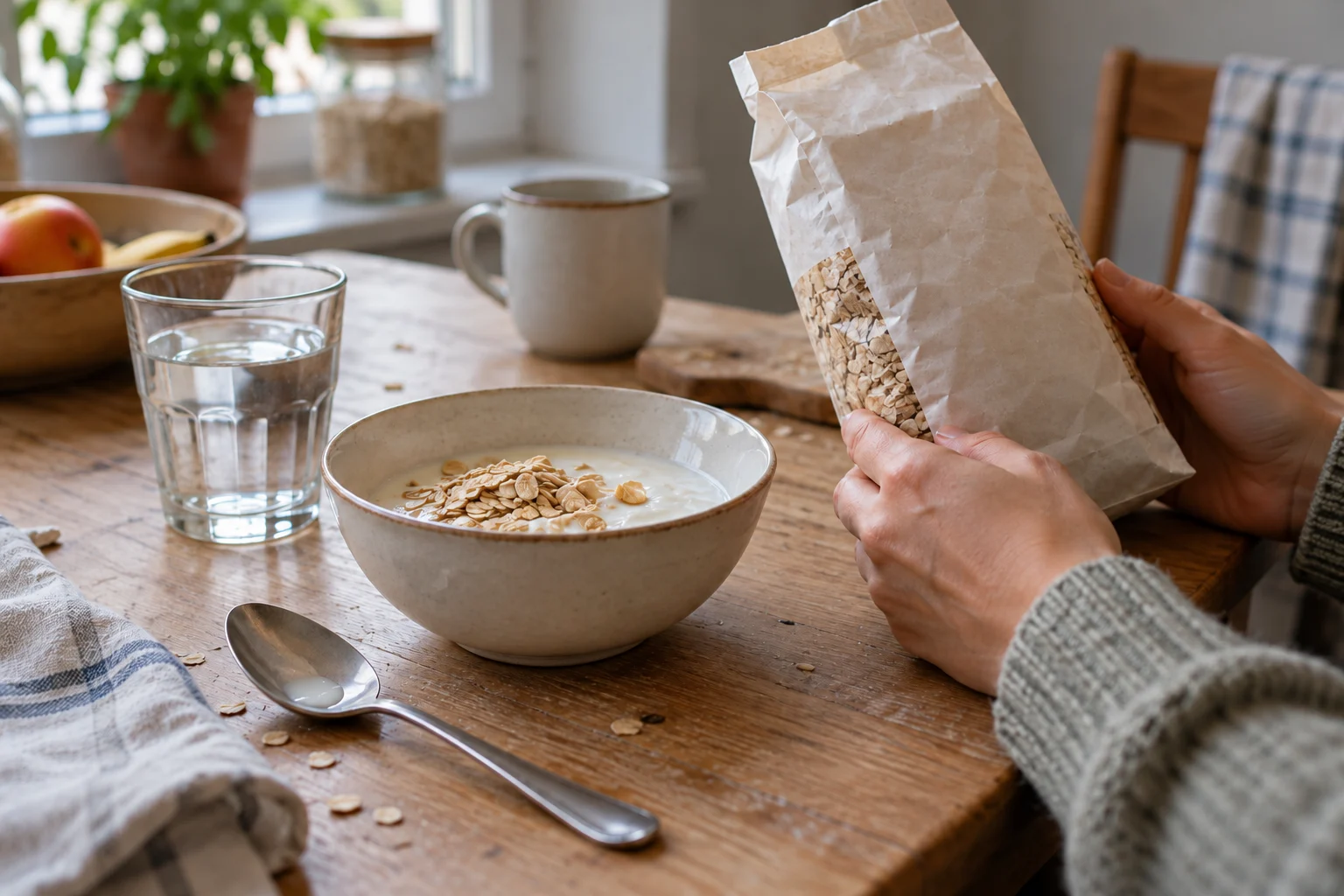
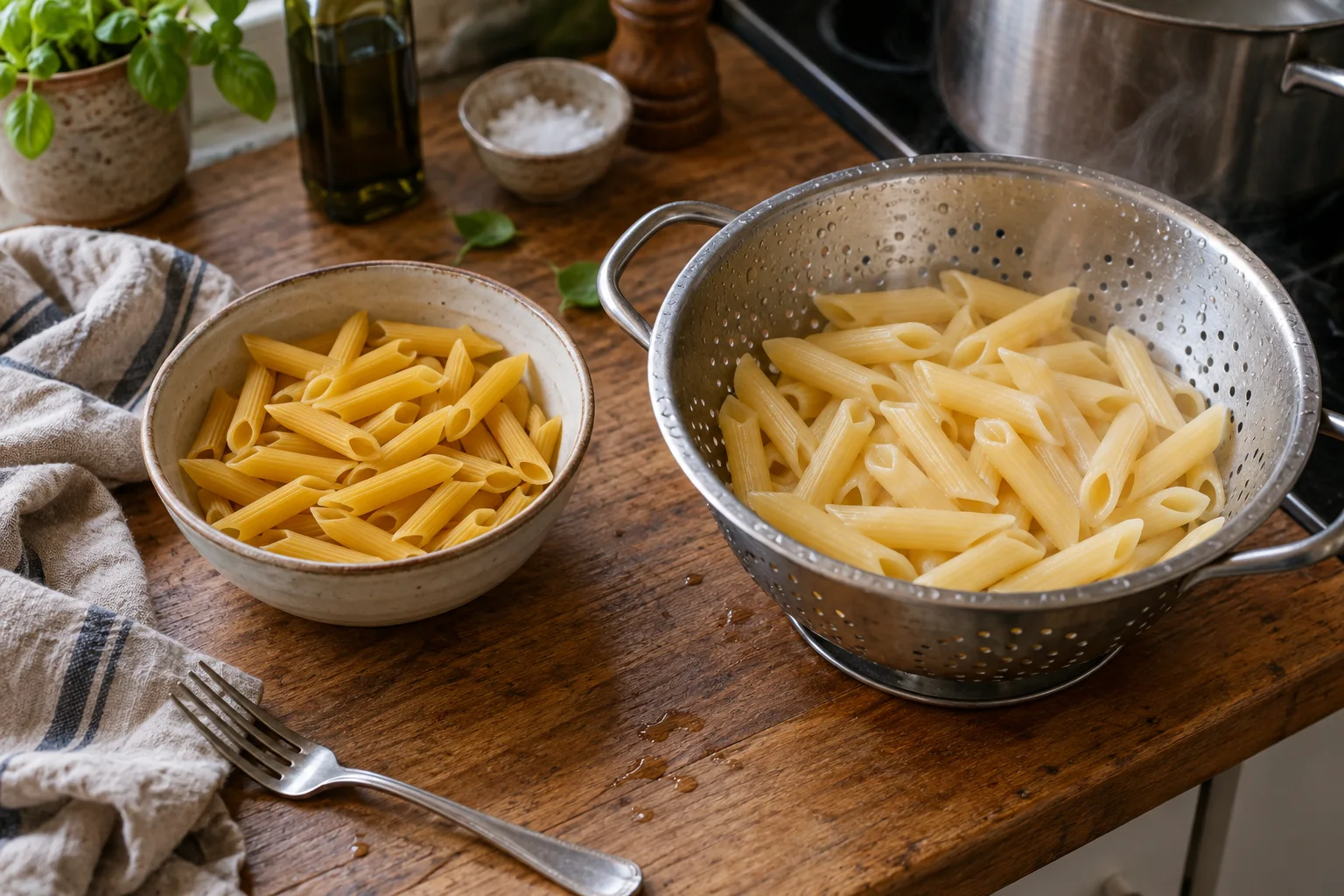
Dry weight or cooked weight? Start with the packet
If the nutrition values refer to dry pasta, weigh it dry. If they explicitly refer to boiled or cooked pasta, use the drained cooked weight. Either method can work. The common mistake is weighing a plate of cooked penne and treating those grams as dry penne.
Dry pasta takes up water as it boils. The scales register that water, but water adds no calories. That is why 100 g on your plate and 100 g from the cupboard can have different energy values.
On prepacked pasta sold in the EU, the nutrition declaration generally describes the food as sold. Where appropriate, information can refer to the food after preparation if the pack gives sufficiently detailed instructions. Look beside the table for wording such as as sold, uncooked or as prepared. Fresh pasta in the chilled aisle is sold fresh, so a figure from a box of dried pasta is the wrong reference even before you turn on the hob. Elsewhere in Europe, follow the wording on the pack in your kitchen.
One pan, two plates and lunch for tomorrow
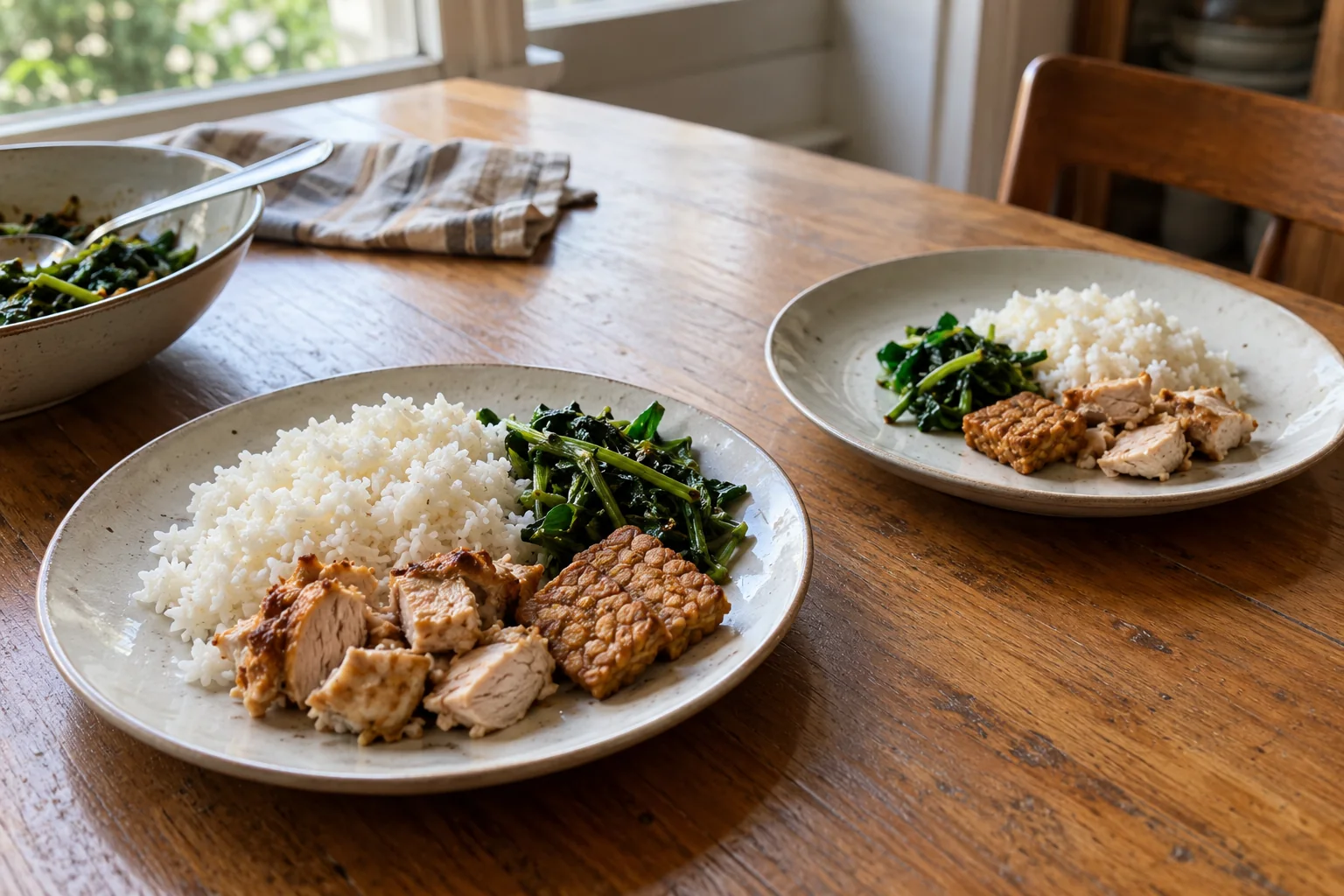
You do not have to weigh each person's dry serving separately. For plain pasta, you can use the share of the cooked batch that lands on your plate. Here is a worked example using round numbers:
- You put 240 g of dry pasta into the pan. Your packet says 350 kcal per 100 g dry, so the pasta going into the pan accounts for about 840 kcal.
- After draining, all the pasta together weighs 600 g. Weigh the pasta without the colander, or zero the bowl on the scales first.
- You serve 150 g of that cooked batch. That is one quarter of the batch: 150 ÷ 600. One quarter of 840 is about 210 kcal for the plain pasta on that plate.
The 600 g yield is an example, not a conversion factor. Shape, cooking time and draining affect the result. Weigh your own batch if you want to use this method. Do the calculation before adding sauce; once the pan contains other ingredients, its weight no longer represents pasta alone.
What if you only have the finished plate?
At a canteen or a friend's table, the dry weight is usually the one detail you do not know. Use a cooked-pasta reference if you have one, or make a reasonable estimate from the plate. A made-up dry weight will not make it more accurate. Think about what you actually ate: penne, tomato sauce, a spoon of pesto, perhaps some cheese. Do not add a topping twice if the estimate already includes it.
In Nourri Nutrition, take a photo of your plate. Review the foods and estimated portion before saving the meal. A photo cannot tell you how much dry pasta went into someone else's pan. If the serving was larger or smaller than the one shown, adjust the portion; if the dish itself was different, a portion change alone cannot account for that.
For a closer look at the numbers on the box, see how to read per-100-g and per-portion values on EU food labels. For tonight's dinner, the useful habit is simpler: read the little word next to the grams before you weigh.