Start with the time you have
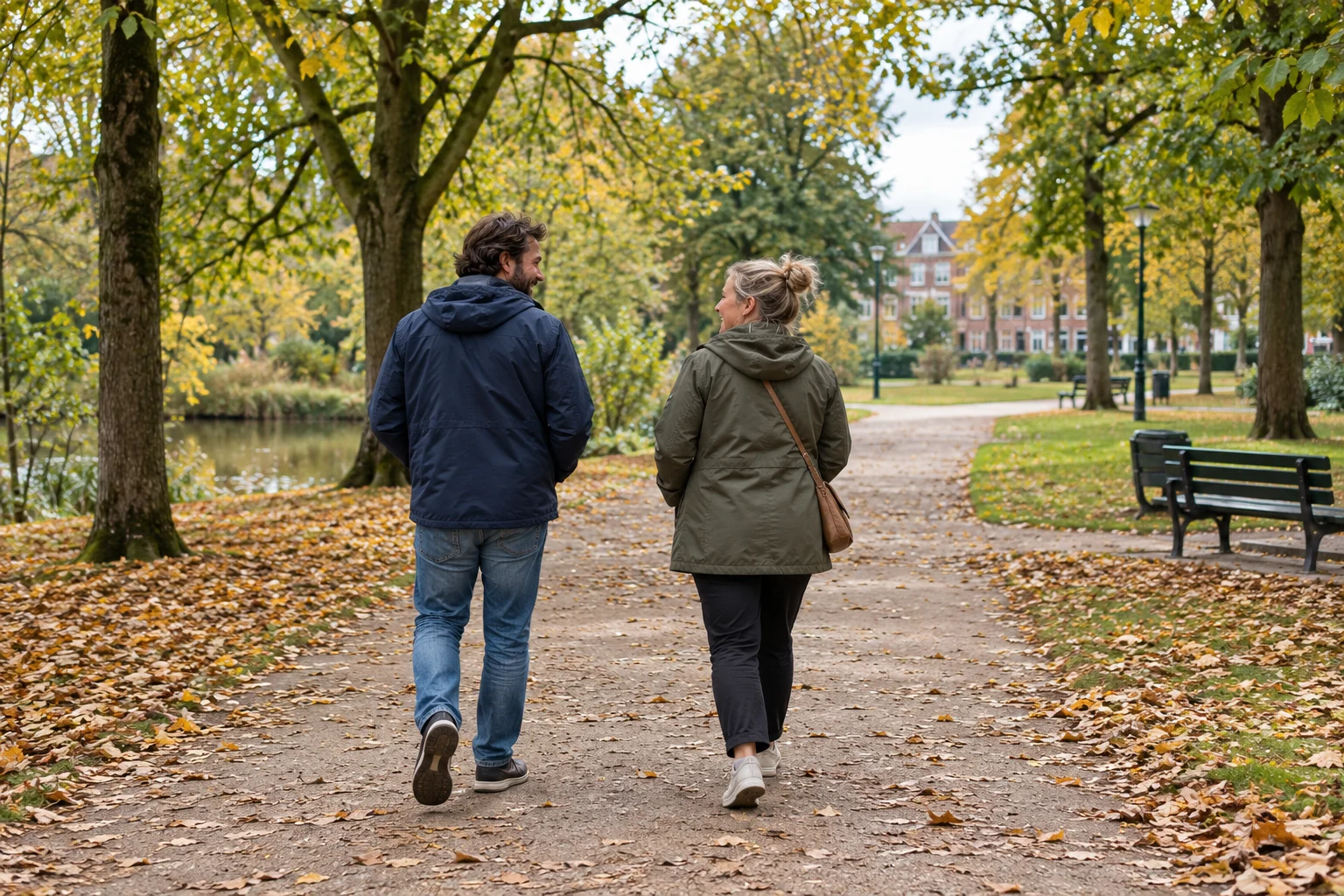
An autumn walk can begin between meetings, after the school run, or before a weekend coffee. You do not need a new destination every time. A familiar park loop is often easier to fit into an ordinary day than a journey across town.
Across Europe, daylight, weather and access vary by place and date. Build your plan around your own neighbourhood. This guide is for straightforward local walks on familiar paths; a remote, mountain or winter route needs preparation suited to those conditions.
Give the daylight a little breathing room
Check the local sunset time and forecast before choosing when to leave. Also check park gates or other access restrictions along your route. A pleasant path at lunchtime may feel quite different near closing time.
Ordnance Survey's walking-route guide recommends allowing time for stops, checking available daylight and planning alternatives. For an everyday walk, that might mean choosing a shorter loop you already know and identifying where you can turn back.
Keep your return comfortably within the daylight you intend to use. If conditions change or the path is slower than expected, shorten the outing. Treat a recorded route as a record of where you went; it does not establish that a path is currently open or suitable.
Choose one small plan
Here are three ways to give a short outing a clear shape. These are planning ideas, not exercise targets.
| The time you have | A simple starting point |
|---|---|
| A brief break | An out-and-back along a familiar street or path, with a clear turnaround point. |
| A flexible lunch break | A small park loop with room for a bench stop. |
| A relaxed weekend morning | A familiar loop with an optional extension, decided before you set off. |
Include the time it takes to reach the path and get back to your next commitment. If a coffee stop is part of the plan, count that too. Choosing the shorter option is a perfectly useful outcome.
A coat, shoes and route that fit the actual conditions matter more than making the outing look impressive. Leave the ambitious distance for a day when you have the time and conditions for it.
Record the walk in Nourri Active
Once you have chosen where to go:
- Open Active, then Move.
- Select Walk as the Sport.
- For an outdoor route recording, check the location shown on the map and grant the location permission requested by the app.
- Start when you are ready. Put the phone away while you walk, and stop somewhere suitable before interacting with it.
- At the end, finish the recording and review the activity before saving it.
If the location shown is unexpected, pause your start and check it. Our guide to GPS routes that look different from the actual path explains what to look for.
Read the result in the context of your day
A bench stop or a conversation can be part of a good walk. When you review the activity, moving time and elapsed time help describe different parts of that outing. For a Nourri recording, moving time excludes pauses; elapsed time covers the span from start to finish.
Use the saved activity to answer a practical question: did this route fit the time you had? A comfortable familiar loop can be worth repeating. On another day, you might choose an earlier start or the shorter option.
For your next daylight break, pick one manageable route and save the walk in Nourri Active. Let the record help you remember what worked.